

HVAC & Air Duct Mold Remediation Phoenix AZ
You notice a musty smell every time the AC kicks on, or allergy symptoms that seem worse at home. Mold inside ductwork or around the air handler is common in Phoenix due to constant condensation. Our team provides specialized HVAC mold removal to restore your indoor air quality and system efficiency.
Our HVAC Remediation Process
Duct-Specific Inspection
First, our team inspects inside the ductwork using a small camera, since duct mold isn't visible the way wall mold is.
System Shutdown
Second, the HVAC system gets shut off immediately so it stops spreading spores through the house.
Sealing & Containment
Third, vents and registers get sealed room by room.
Negative-Pressure Duct Cleaning
Fourth, a HEPA-filtered vacuum connected directly to the ductwork removes contamination without spreading it — this follows the national duct-cleaning standard (NADCA).
Coil & Drain Pan Cleaning
Fifth, the coil and drain pan get cleaned separately, since that's usually where the mold started.
Antimicrobial Treatment
Sixth, everything gets treated with an EPA-approved antimicrobial.
Post-Clean Verification
Seventh, a follow-up inspection, and sometimes an air quality test, confirms it's clean.
Why It Happens in Phoenix
In Phoenix, mold inside ductwork almost always traces back to an AC condensate line or drain pan that failed, not just general humidity. Condensation naturally forms around cooling coils and inside ductwork as the system works to remove moisture from the air.
Attic-mounted air handlers sit in hot attic spaces, creating ideal conditions for mold growth inside a system most homeowners never inspect directly. HVAC mold in our region is overwhelmingly a downstream consequence of these condensate line or drain pan failures.
Signs of HVAC Mold
- A musty smell that's strongest when the AC first kicks on.
- Visible dark spots or fuzzy growth around vents or registers.
- Unexplained allergy symptoms that improve when you are away from home.
- Unusually humid air or condensation forming on your AC vents.
Equipment & Standards
Following IICRC S520 and NADCA ACR standards:
- Negative-pressure vacuums
- Borescope cameras
- EPA-approved biocides
- HEPA air scrubbers
What to Expect: Timeline
Most single-system jobs complete in 3 to 6 hours on site. Severe cases involving duct replacement or extensive coil cleaning may take longer.
What It Typically Costs
- Basic Cleaning: $400–$1,500
- Full Remediation: $2,500–$4,000
- Duct Replace: $5,000+
Coil and drain pan issues are the most common mold sources.
Example Project: HVAC Duct Mold Remediation in Peoria
This is an illustrative example showing how a typical project like this comes together — costs, timelines, and photos are representative of real Valley jobs, not a specific completed job.
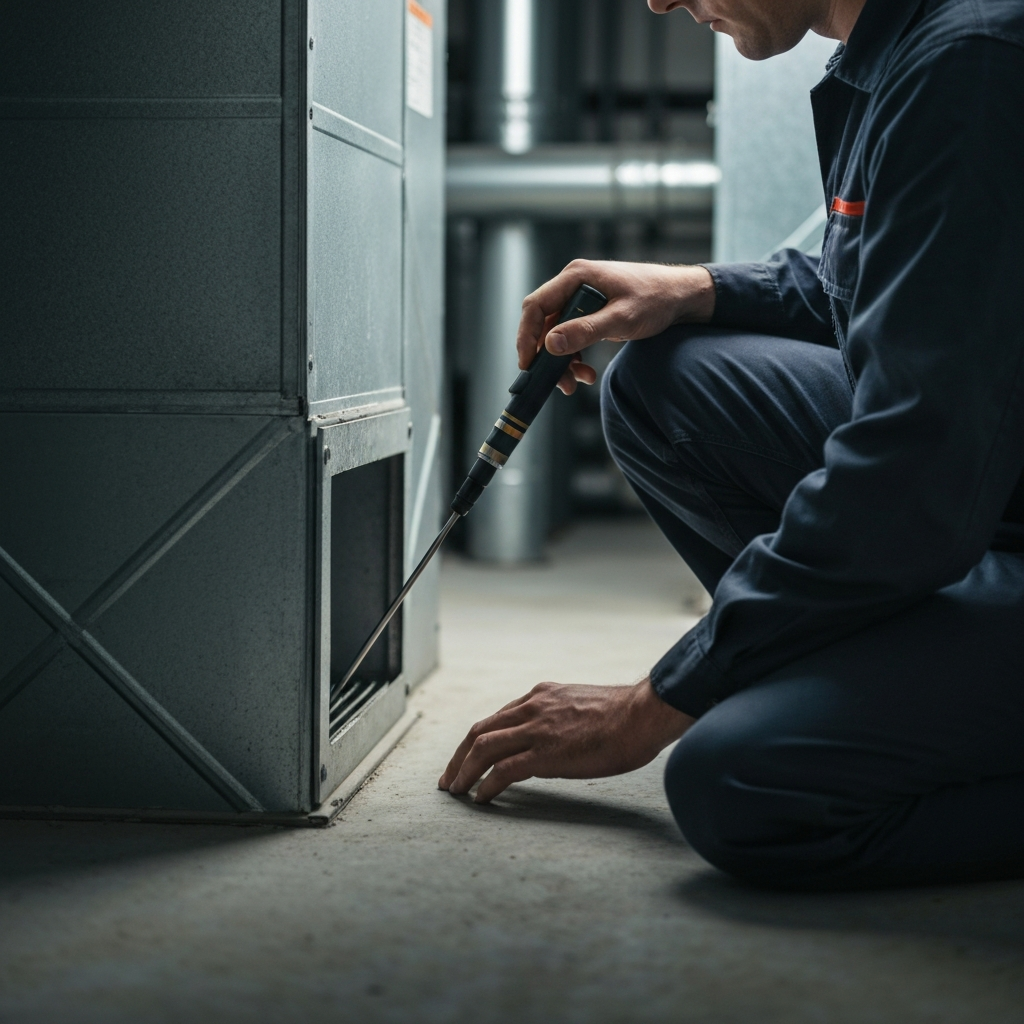
Example only — illustrative rendering, not a photo of a completed job.
The Home
A Peoria home where the homeowner noticed a musty smell whenever the AC kicked on. A borescope inspection traced visible mold growth to the coil and drain pan, stemming from a condensate drain line that had been slowly clogging for months.
How We Built the Estimate
- On-site inspection with a borescope camera to assess mold extent inside the ductwork, plenum, and on the coil/drain pan.
- Confirmed the root cause — a clogged condensate line — as the downstream source, connecting this job directly to the AC condensate content on the site rather than treating it as a generic humidity issue.
- Determined scope covered ductwork, coil, and drain pan, without needing duct replacement.
- Recommended negative-pressure duct cleaning per NADCA ACR methodology, plus separate coil and drain pan treatment.
- Written, itemized estimate — broken into inspection, duct cleaning, and coil/pan treatment categories, not a single lump number.
Cost Breakdown (Example)
| Line Item | What's Included | Estimated Cost |
|---|---|---|
| Inspection & containment | Borescope inspection, supply/return sealing | Included in scope |
| Duct cleaning | Negative-pressure, HEPA-filtered, NADCA ACR methodology | $1,000 |
| Coil & drain pan treatment | Cleaning and antimicrobial application | $650 |
| Total (example) | $1,650 | |
Full HVAC mold remediation including coil treatment typically runs $1,500-$5,000 — this example landed on the lower end since duct replacement wasn't needed and the growth hadn't spread beyond the coil and drain pan.
The Process
Inspected the ductwork, plenum, and coil/drain pan with a borescope camera.
Shut down the HVAC system immediately to stop spore circulation.
Sealed supply and return points room by room before cleaning began.
Ran negative-pressure, HEPA-filtered duct cleaning per NADCA ACR methodology.
Cleaned and treated the coil and drain pan separately from the ductwork.
Applied antimicrobial treatment to interior duct surfaces after physical cleaning.
Re-inspected visually to confirm the job met spec before returning the system to service.
Timeline (Example)
| Day | Activity |
|---|---|
| Single Visit | Inspection through final verification |
Single visit, roughly 5 hours on site — inspection through final verification, since duct replacement wasn't needed. Most single-system jobs like this one complete in one visit; severe cases requiring duct replacement run longer.
Why It Was Worth Doing
HVAC mold in Phoenix is overwhelmingly a downstream consequence of condensate failures, not humidity alone — treating the ducts without addressing the clogged line would have left the problem to come right back. Clearing the actual root cause is what makes this fix hold.
Unbiased Testing & Clear Pricing
Our team's inspection and testing process is built to give you a straight answer about what's actually in your system. We use independent labs for all testing. We provide a written, itemized cost breakdown before any work starts, with no surprise add-ons.
We accept all major credit/debit cards, cash, check, and insurance claims.
Call Our Team: (480) 568-6410Frequently Asked Questions
Breathe Easier with Clean Air Ducts
Serving homeowners across the Phoenix Valley since 2026. Our team is ready to restore your indoor air quality and system efficiency.
Request Service