

AC Condensate Leak Water Damage Repair Phoenix AZ
You notice a brown stain spreading across a ceiling or a soft spot forming, with no storm and no plumbing nearby—and it turns out to be the AC condensate line above. This is a uniquely local problem. Our team extracts the water, dries the ceiling, and restores your property before mold takes root.
Why Attic AC Leaks Happen
Most Phoenix homes have attic-mounted air handlers, and the AC runs nearly year-round. This setup creates several common failure points that lead to ceiling water damage:
Clogged Drain Line
Algae and dust buildup block the line, causing the primary pan to overflow.
Cracked Drain Pan
Metal pans corrode or plastic pans crack over time, leaking even when lines are clear.
Frozen Evaporator Coil
Ice buildup from low refrigerant melts and overwhelms the drain system.
Failed Condensate Pump
Pumps that push water out of the attic fail, leading to an immediate backup.
Sweating Ductwork
Cold air in uninsulated ducts causes external condensation that drips onto the ceiling.
Our Ceiling Restoration Process
Confirm HVAC Root Cause
Our team confirms the AC system is off and the root cause has been identified. If the mechanical repair hasn't happened yet, we coordinate with a trusted HVAC technician to stop the flow.
Assess Spread Pattern
Attic-mounted air handlers sit directly above ceiling drywall. We identify exactly where the overflow tracked—often showing up as a ceiling stain or active drip far from the unit.
Moisture Mapping
Thermal imaging traces how far water has traveled through ceiling drywall, insulation, and framing from the point of entry, ensuring no hidden moisture is left behind.
Extraction & Material Assessment
Affected ceiling drywall and insulation are evaluated for removal versus drying in place. Saturated insulation must be removed to allow the framing to dry properly.
Structural Drying
Air movers and LGR dehumidifiers are positioned specifically for ceiling-level drying, which requires different equipment placement and airflow than floor-level losses.
Mold Risk Check & Prevention
Condensate leaks often go undetected for days. Checking for early mold growth in the affected insulation and drywall cavity is a standard part of our specialized protocol.
How We Classify This Damage
AC condensate leaks are Category 1 (Clean) at the source. However, because they are frequently undetected for days or weeks, they often present as an advanced Class 2 or 3 situation where water has fully saturated insulation and framing above your living space.
Attic Heat Safety Protocols
Phoenix attics regularly get hot enough in summer that extended unprotected work isn't safe. Our team schedules attic work around the heat and takes regular breaks — this is a genuine safety practice, not just a talking point. Accessing an attic-mounted air handler to diagnose a condensate leak means working in these same extreme-heat conditions, so these rules are strictly followed.
Equipment & Standards
Following IICRC S500 standards:
- Thermal imaging
- Moisture meters
- LGR dehumidifiers
- Ceiling-level air movers
What to Expect: Timeline
Expect 3 to 5 days for standard Class 1-2 drying once the HVAC root cause is fixed. Timelines extend if the leak went undetected for weeks.
What It Typically Costs
- Cleanup: $1,000–$3,000
- If Mold Present: +$10–$25/sq ft
- HVAC Repair: Varies (Ref)
Undetected leaks are the most common cost driver.
Example Project: AC Condensate Leak Water Damage in Queen Creek
This is an illustrative example showing how a typical project like this comes together — costs, timelines, and photos are representative of real Valley jobs, not a specific completed job.
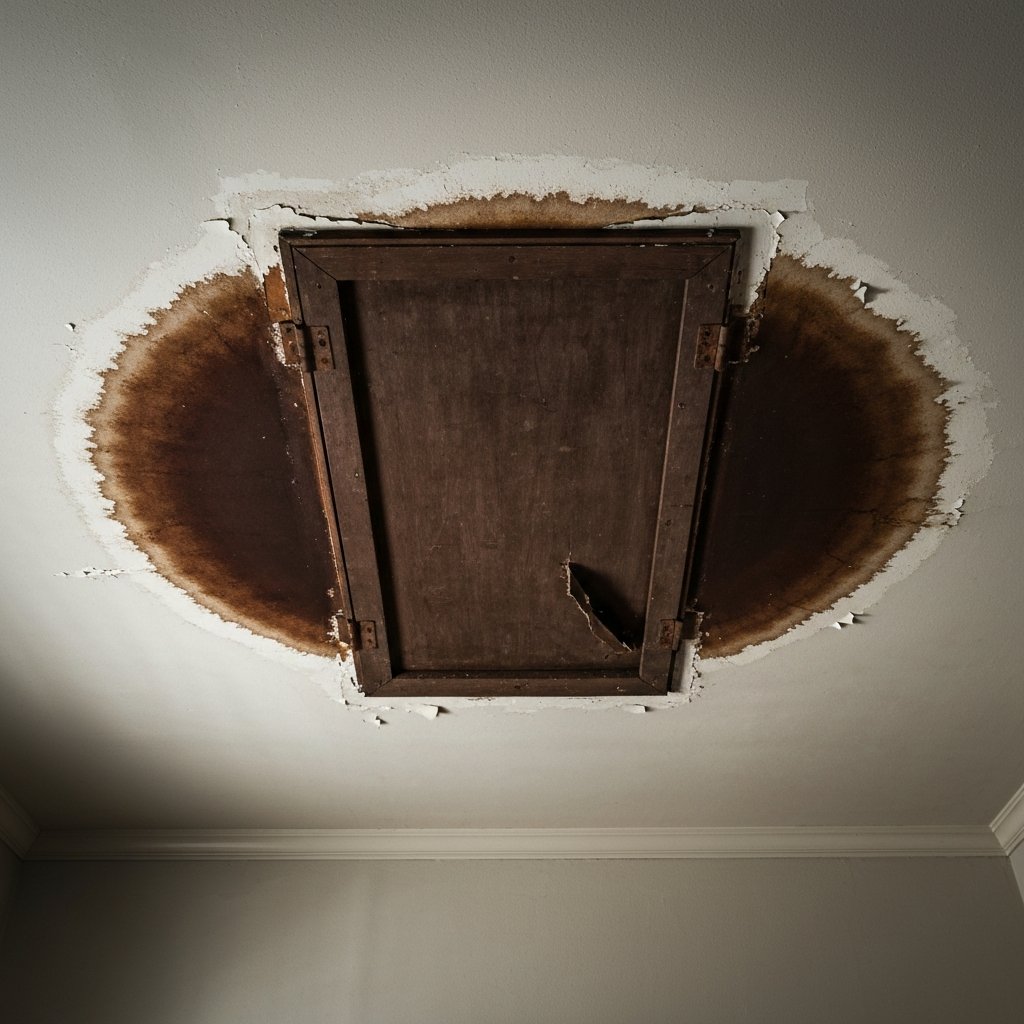
Example only — illustrative rendering, not a photo of a completed job.
The Home
A Queen Creek home with an attic-mounted air handler. The homeowner noticed a ceiling stain in a bedroom directly below the unit — an HVAC technician traced it to a clogged condensate drain line that had been slowly overflowing the drain pan for an unknown period.
How We Built the Estimate
- On-site inspection to confirm the HVAC repair (clearing the line) was complete before scoping the cleanup, since the mechanical fix itself isn't AZ Water Damage Pro's scope.
- Assessed the spread pattern — attic-mounted units overflow directly above ceiling drywall, so the stain typically shows up before anyone realizes there's an attic-level leak.
- Thermal imaging traced water further into the ceiling drywall and insulation than the visible stain suggested, since the leak had likely been running undetected for days or weeks.
- Category determination: clean water at the source, but the extended undetected period pushed this into a more advanced Class 2-3 situation than the "clean water" label alone would suggest.
- Written, itemized estimate — broken into extraction, drying, and mold-risk check categories, not a single lump number.
Cost Breakdown (Example)
| Line Item | What's Included | Estimated Cost |
|---|---|---|
| Inspection & moisture mapping | Thermal imaging, ceiling-level assessment | Included in scope |
| Ceiling-level extraction & drying | Air movers and LGR dehumidifiers positioned for ceiling drying | $1,500 |
| Mold-risk check | Inspection of affected insulation and drywall cavity | $400 |
| Total (example) | $1,900 | |
AC condensate leak cleanup typically runs $1,000-$3,000 for a contained single-room event, aligning with standard Category 1 mitigation — this example landed toward the higher end because the leak had gone undetected long enough to reach the insulation, not just the drywall surface.
The Process
Confirmed the HVAC drain line repair was complete before starting cleanup.
Assessed the ceiling-level spread pattern typical of attic-mounted units.
Mapped moisture through the ceiling drywall, insulation, and framing with thermal imaging.
Positioned air movers and dehumidifiers for ceiling-level drying, which needs different placement than a floor-level water loss.
Checked the affected insulation and drywall cavity for early mold growth, since the leak had run undetected for a period before the stain appeared.
Verified dry-standard readings before closing out the job.
Timeline (Example)
| Day | Activity |
|---|---|
| Day 1 | Inspection, moisture mapping, HVAC repair confirmation |
| Day 2-4 | Ceiling-level drying, daily monitoring, mold-risk check |
| Day 5 | Final verification and handoff |
This job ran slightly longer than the typical 3-5 day window because the leak had been running undetected before the ceiling stain appeared.
Why It Was Worth Doing
A condensate leak that goes undetected is one of the most common root causes of attic and HVAC mold cases seen across the Valley. Catching the early mold risk during this cleanup — rather than treating it as a simple ceiling stain — is what kept this from turning into a second, separate mold remediation job later.
Clear Pricing & Insurance Support
Condensate leak damage is often covered as a sudden, accidental event. Our team documents the damage and cause clearly to support your claim. We provide a written, itemized cost breakdown before any work starts, ensuring no surprise add-ons.
We accept all major credit/debit cards, cash, check, and insurance claims.
Call Our Team: (480) 568-6410Frequently Asked Questions
Fix the Damage, Prevent the Mold
Serving homeowners across the Phoenix Valley since 2026. Our team is ready to restore your ceiling and attic fast.
Request Service