
Slab Leak Water Damage Repair Phoenix AZ
Your plumber found and fixed the leak. The water that soaked into your slab and walls is a separate problem—that's ours.
Our Slab Restoration Process
Confirm Plumber's Leak Location
Our team picks up after the plumbing side (leak detection and pipe repair or reroute) is handled. We coordinate with your plumber to ensure the source is fully stopped before drying begins.
Moisture Mapping of the Structure
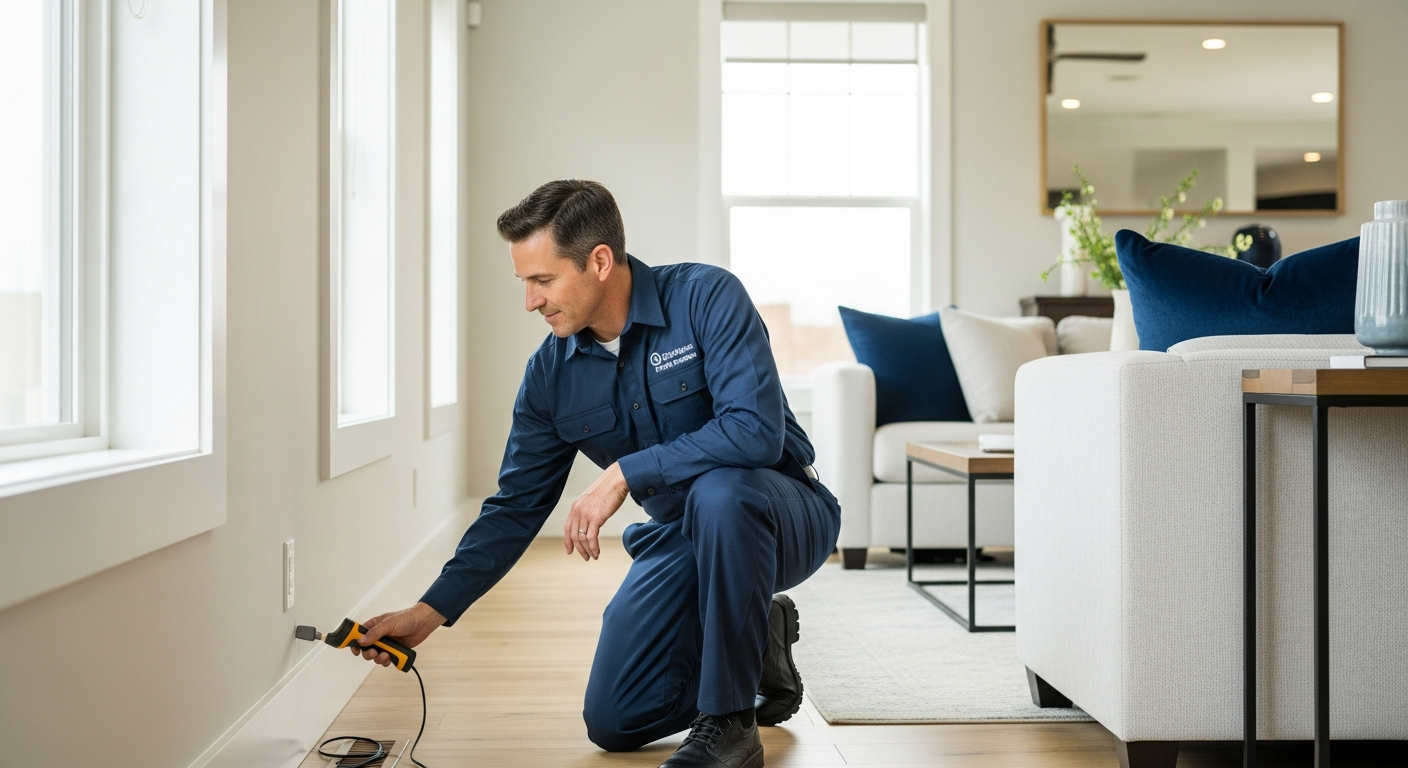
Using thermal imaging cameras and moisture meters, we trace exactly how far water migrated through the concrete slab and up into adjacent walls or flooring.
Categorize & Classify the Scope
Slab leaks are almost always Class 4 drying situations, involving deeply saturated dense materials like concrete that require specialty equipment and longer drying times.
Remove Non-Salvageable Materials
We remove ruined flooring and materials directly over the leak area to facilitate deep drying of the foundation and prevent mold growth under your new floors.
Specialty Drying Setup
We deploy desiccant dehumidification and sometimes heat drying systems designed for low-porosity materials like concrete slabs, as standard LGR units often struggle with dense foundations.
Extended Daily Monitoring
Concrete drying takes materially more time than drywall. We monitor moisture levels daily until the foundation reaches its dry standard, providing a solid base for your rebuild.
Verification & Flooring Handoff
Once the slab is verified dry, we provide the documentation needed for your flooring contractor to begin repairs with confidence that no moisture is trapped.
How We Classify This Damage
We classify slab leaks as Class 4 specialty drying situations. This means the moisture is trapped inside dense, low-porosity materials like concrete or stone. Class 4 jobs require specialized equipment and different airflow protocols than a standard drywall or carpet drying job.
Why It Happens in Phoenix
Copper supply lines run under concrete slab foundations in most local homes. Phoenix's caliche soil—a dense, calcium-carbonate-cemented soil—shifts seasonally with moisture changes.
This movement stresses buried pipe over time. Hard water and aging copper accelerate the risk of sudden under-slab failures. Our team understands these local soil dynamics and how they impact your foundation.
Signs of a Slab Leak
- A water bill that jumped with no clear reason.
- A warm spot on tile or carpet.
- The sound of water running when nothing is on.
- A musty smell developing in one area of the home.
Equipment & Standards
Following IICRC S500 Class 4 protocols:
- Desiccant dehumidifiers
- Thermal imaging cameras
- Moisture meters
- AZROC
What to Expect: Timeline
Concrete drying takes materially more time than drywall. Expect an extended drying period compared to standard water losses—often a week or more to reach the required dry standard for the foundation.
What It Typically Costs
- Cleanup/Drying: $630–$4,400
- Dehumidification: $500–$1,500
- If mold present: +$500–$4,000
Note: Leak detection ($150–$400) and slab access/repair ($900–$8,400) are the plumber's or foundation contractor's job and are not part of this cost.
Example Project: Slab Leak Water Damage Repair in Chandler
This is an illustrative example showing how a typical project like this comes together — costs, timelines, and photos are representative of real Valley jobs, not a specific completed job.
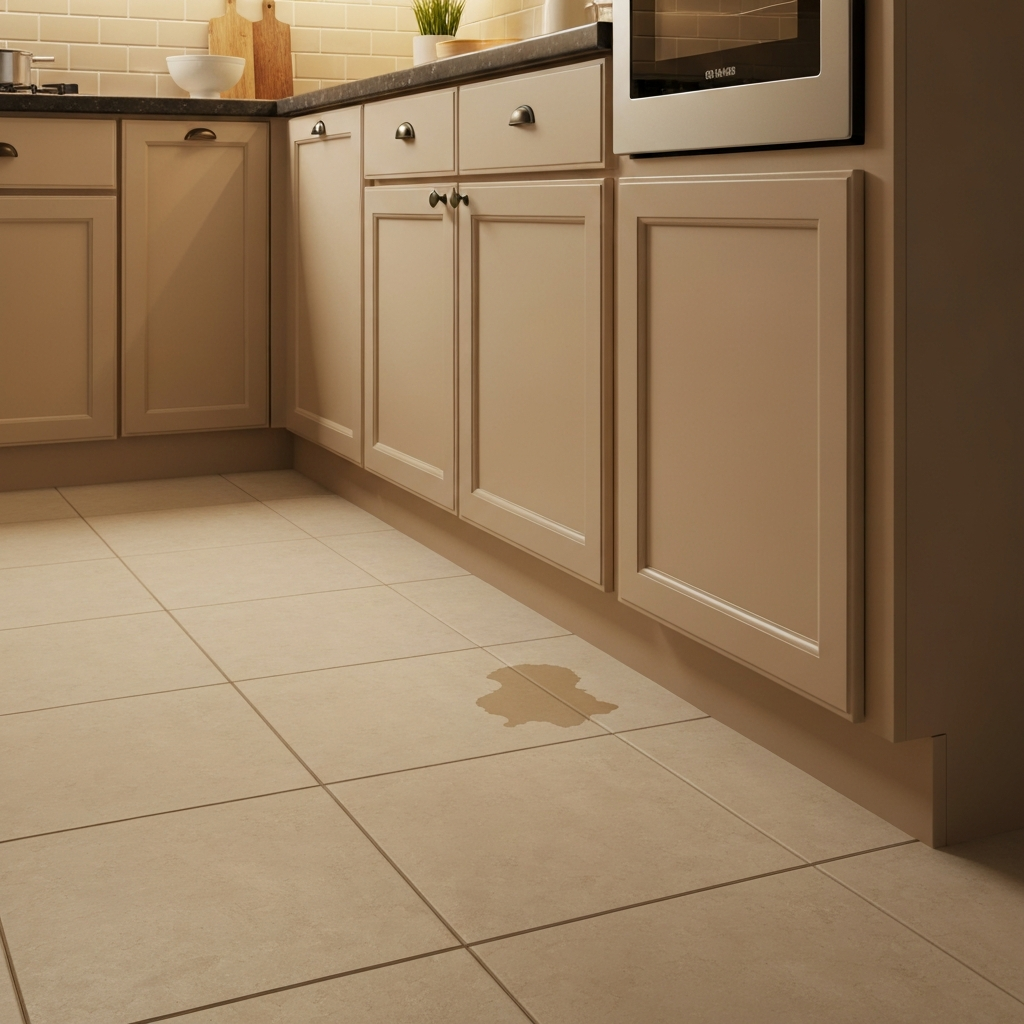
Example only — illustrative rendering, not a photo of a completed job.
The Home
A single-story ranch home in Chandler, built in the early 1990s, roughly 1,800 sq ft. The homeowner noticed a warm spot on the kitchen tile and a jump in the water bill. A plumber traced it to a slab leak under the kitchen and completed the pipe repair — the water damage left behind was a separate problem.
How We Built the Estimate
- On-site inspection using thermal imaging and moisture meters to trace how far water had migrated through the slab and up into adjoining walls.
- Roughly 180 sq ft of flooring and two wall sections tested wet — this pattern classified the job as Class 4 (dense material saturation), the main factor in the estimate.
- Reviewed the plumber's completed repair location to confirm the source was fully addressed before scoping the cleanup.
- Recommended desiccant dehumidification rather than standard units, since concrete releases moisture far slower than drywall or carpet pad.
- Written, itemized estimate — broken into extraction/drying, material removal, and equipment categories, not a single lump number.
Cost Breakdown (Example)
| Line Item | What's Included | Estimated Cost |
|---|---|---|
| Inspection & moisture mapping | Thermal imaging, moisture meter survey, classification | Included in scope |
| Water damage cleanup (Class 4) | Extraction, flooring removal, desiccant drying setup | $2,400 |
| Extended monitoring | Daily moisture logs through dry standard | $700 |
| Total (example) | $3,100 | |
Slab leak water damage cleanup in the Phoenix metro typically runs $630-$4,400 — this example falls above the middle of that range because of the wall cavity work described below.
The Process
Confirmed the plumber's completed leak repair before starting cleanup scope.
Mapped moisture through the slab and surrounding walls with thermal imaging and moisture meters.
Removed non-salvageable tile directly over the leak path.
Set up desiccant dehumidifiers, since standard units aren't efficient enough to dry saturated concrete.
Day 3 moisture check showed water had wicked slightly further into one wall cavity than the initial map suggested — crews made a small flood cut to confirm the cavity was dry behind the surface before closing it back up.
Verified dry-standard moisture readings throughout the slab and wall cavities before flooring and drywall went back in.
Timeline (Example)
| Day | Activity |
|---|---|
| Day 1 | Inspection, moisture mapping, tile removal |
| Day 2-4 | Desiccant drying, daily monitoring |
| Day 5 | Flood cut and wall cavity check |
| Day 6 | Final verification and handoff |
Concrete drying takes longer than a standard water loss — this example ran 6 days against a typical 3-5 day Class 1-2 job because of the added wall cavity check.
Why It Was Worth Doing
Arizona's caliche soil and aging copper supply lines make slab leaks a routine cause of hidden water damage in Valley homes. Verifying the wall cavity was fully dry before closing it back up meant the homeowner didn't end up with a hidden mold problem discovered months later — the kind of issue that costs far more to address once it's sealed behind new drywall.
Clear Pricing & Insurance Support
Slab leak water damage is often covered under homeowner policies as a sudden and accidental event. Our team documents everything from the first visit—including coordination with the plumber's repair—to support your claim. We provide a written, itemized cost breakdown before any work starts.
We accept all major credit/debit cards, cash, check, and insurance claims.
Call Our Team: (480) 568-6410Frequently Asked Questions
Protect Your Foundation and Your Home
Serving homeowners across the Phoenix Valley since 2026. Our team is ready to handle the complex drying your slab leak requires.
Request Service